Monday, 29 March 2010

Haiti's beauty is not all under the rubble

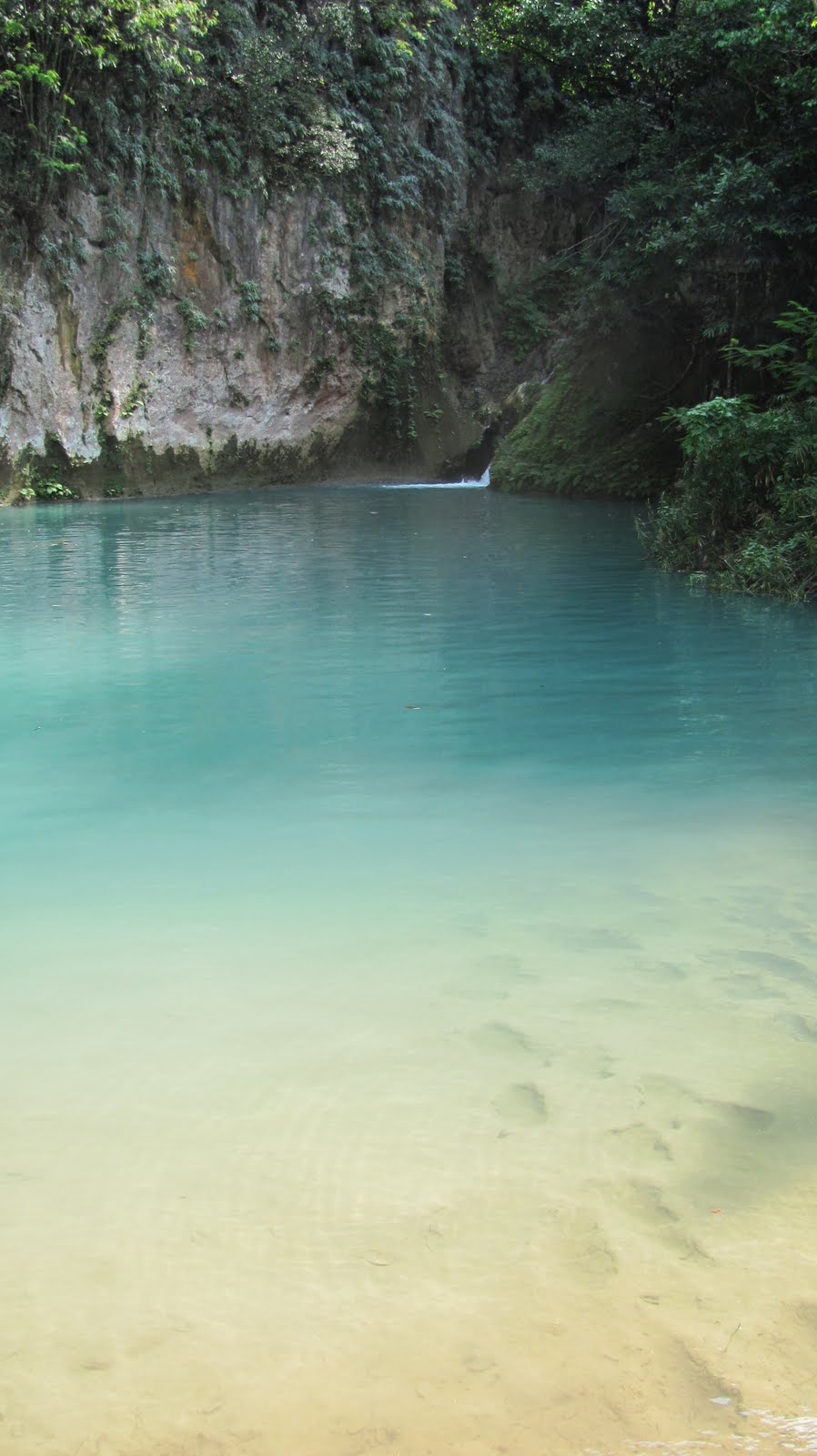
Haiti is beautiful even in a season of disaster. Yes, we do have Sundays off in Haiti even though the need never sleeps. How could we pass up telling you about this past Sunday? Here is our proof. This Sunday we journeyed to a Kréyòl bohemia art meets French port city called Jacmel, (Jakmèl in Kréyòl). We had a spectacular ride as we drove up a steep and windy road (hoping to not turn too green) about a hour from our base in Grand Goâve. In this trip we crossed through some of the most beautiful spots we have seen thus far. When we arrived in Jacmel we ate at a posh Haitian hotel and hiked to a gorgeous waterfall area. We finished our day off with waterfall spelunking. It was the best day off we have had yet. Inspiring hope for this country too. Haiti's beauty is not all under the rubble.

Jacmel


Friday, 5 March 2010

Haiti's Future is Tied to Food Sovereignty and Local Farming

This is a powerful article in light of the current situation on the ground. Agriculture is the primary livelihood in Grand Goave, the area where we are living. Local food production is easy to neglect with all the current basic needs that abound. Most NGOs have different priorities than the felt needs of the people. Today, in one of the camps a farmer came up to me and asked if we had any extra seed. As the rainy season has come, many of the fields are being prepared for planting. It is easy to forget about the historical and political impact other nations have left behind in Haiti. The videos explain the structural violence and political backdrop of Haiti and its connection with food issues. The prices on commodities like rice, have risen every week in the local market since we have been here. A disaster tax on the informal economies is apparent. Often when we walk through the market and fields in Grand Goave, filled with many fresh veggies and fruits, we wonder who will listen to the voice of the local farmers?

Check out this article...

Haiti's Future is Tied to Food Sovereignty and Local Farming

and videos ...


Tuesday, 2 March 2010

IKEA Haiti?

So while my other half is working in hygiene and health education, you might have asked yourself what I (Ian) am up to. A taste of my work days begins and ends with a capital "L." Currently, I am enveloped in latrine land. When I first arrived in Haiti the amount of latrines that were being built was low and the current strategy of trying to build the latrines on site became a logistical nightmare as supplies and resources were limited. The grant we are working on has a target of 500 latrines, bath units, hand-washing units and rubbish pits, all of which must be completed by early May, 2010. Quite a project indeed. Since tens of thousands of people have lost their homes to the earthquake, there are many people living within IDP camps (Internally Displaced Persons). IDP camps are a grab bag - some of them are really organized and well-resourced by local NGOs and international organizations, while many others (perhaps the majority) are chaotic; no organized place to defecate, gather or receive and water and food, and sometimes no resources like plastic tarpaulins to construct a make-shift tent to hide from the swiftly coming rains. With many thousands of people setting up camps on private land, there is no safe way to dispose of human excrement - which obviously lends itself to a more rapid spread of disease.

Needless to say we had to think of a new strategy to pump these latrines out. So about a 2 weeks ago Monica and I were on the beach, and an idea hit me. Perhaps it was a moment of divine inspiration...but I thought that it might be nice to model our latrine production in a prefabricated method, building the floor systems, walls and rafters at our base, and then shipping them to pre-coordinated points within the surrounding area. All that needs to happen in the camps is assembly of the latrine. Thus, IKEA Haiti was birthed. This method maximizes the use of raw materials (even in Haiti) and production adaptation to meet people's needs. Watch out Scandinavia! Here are some pictures of the process...


Wednesday, 17 February 2010

Hand washing & Hygiene in Haiti

Many of the IDP camps we work in have constant demands for hygiene, health and sanitation. The people crowded together with limited resources exacerbates the vulnerability they have to preventable diseases. The environments they live in can not support the daily survival demands. Our jobs focus on these hygiene, health and sanitation issues in the camps. The Haitian people continue to astound us as we have been here and observed how serious and motivated they are about health in the camps. The participation and capacities of the people are unbelievable, from the young to the old. Community based health education in IDP scenarios is critical. In our training program for hygiene and health I work with two local hygiene promotors, one of which is a community nurse. I have the privilege of having two of the greatest woman in all of Haiti, who lead and build up the capacities of all of the communities we work with. Here is a snap shot of our week...

The hand washing workshops


Sunday, 7 February 2010

Our first week in Haiti

We arrived in Haiti via Florida with a stop over on the beautiful Turks and Cacios Caribbean island for a refuel stop. Our first day we were taken to Grand Goave near the Leogane zone which is very near the epicenter of the quake. This is where our base is located. As we drove through the heart of Port-au-Prince, we began to see the vast devastation the quake did to the city. Then as we move into the area we are working for our time here and see even more devastation around us. The impact of the earthquake is immense and indescribable. 80-90% of Leogane is destroyed. Dust abounds. Rubble is everywhere (even more prolific than the number of NGOs here in Haiti). Military helicopters flying over is one of the most common sounds. Internally displaced persons camps are growing fast. The water, shelter, food and medical needs are endless.

Yet the people were busy selling and buying goods and seem to be incredibly resilient in the face of the disaster. The children also were playing and smiling despite being homeless. Many of the children were flying kites high in the sky out of the trash they found. Many tend to paint the Haitians as victims when you read stories in the media...we are seeing more everyday a different reality of resilience, strength and even joy. One example of this happened while working on Wednesday. I was quickly greeted by the children of the village that I had been teaching hygiene and health and to my surprise they wanted to show me something they made. I then saw the area that we had met in previously for the health lessons. The children had creatively transformed it into a community space using the rubble they had found as an outline of the area. Their new joy that day was my joy too. Rubble to community spaces. Deserts to gardens.

A BIT ABOUT OUR JOBS & LIVING AREA-The place where we are living consists of a 12 room compound that is apart of a local Haiti NGO called Haiti Arise which is connected to a local church. Our group fluctuates at times but right now consists of 3 water team members, 2 latrine builders, a Team leader, 1 engineer, 2 rubble removal members, 1 logistician, 1 health and hygiene promoter. Ian continues to swing in between the positions of latrine builder in the internal displaced person camps and logistician (which coordinates supplies and food, hygiene and shelter distributions). I am working as a hygiene and health promotor within the internal displaced camps. The grant for the water and sanitation program we are working from is funded by USAID, incorporates working with handwashing, latrine use, bathing facilities, mental health (earthquake trauma care) and good hygiene practices. Everyday we go to a new camp to build latrines and promote health and hygiene activities. We usually work for a good 10-12 hours a day. But we are all functioning on disaster mode. Otherwise, we are staying busy and loving the area of Grand Goave and Leogane we are stationed at. Hopefully we will pick up more French and Creole while we are here. So here are a few glimpses of our first week.

The Beautiful Children


The Latrine Construction in the Camps


The Latrine finished product


Internally Displaced Persons Camp


Rubble to Community Space


Wednesday, 3 February 2010

Haiti Bound

We've been really quite busy since we've been back in the States and have been behind on sending updates. So, this is our attempt at a quick update, sorry if you have not heard about this first hand. Our plans have changed drastically over the past few days in that we have decided to go to Haiti as part of Samaritan's Purse's DART (Disaster Assistance Response Team), and have decided not to go to South Africa to work on HIV intervention projects. Instead, we have signed a 1 year contract with Samaritan's Purse and will be spending the better part of this time in Haiti. The first month of our contract will be spent doing more disaster response oriented tasks such as providing food, water and temporary shelter, to many people affected by the earthquake which occurred on January 12th, 2010. After this initial month, we will transition into a more development and re-construction-oriented team once the emergency phase begins to wind down - which certainly could take some time. The United Nations has said that this disaster rivals the Tsunami that ravaged many countries in South East Asia in 2004. 3 million people have been affected by this disaster and more than 200,000 people have died.

We are leaving for Haiti Thursday Feb. 4th and this will be our first taste of a major disaster response situation. We have many friends there already and will be spending time working and serving with old colleagues from the London-based NGO we worked at before moving back to America at the end of December. Our internet connection while we are there is unpredictable, but we will keep updates coming as we have connection. Love you all.

Saturday, 21 November 2009

Smog, Monkeys & Temples - Welcome to Kathmandu

Well, shall we begin with a little history on Nepal before moving to the glorious sights of Kathmandu, the ole' fabled city...

Nepal is a land-locked country bordering India on three sides and bordering China (and Tibet) across the Himalaya Mountains on its northern edge. Recently emerging from a decade long civil war between government forces and Maoist insurgents, Nepal hangs in the balance of a new and fragile political identity. We did see the Maoist becoming more active while we were there. The Maoist were blockading key institutions like the airport or government buildings in Kathmandu. The streets were filled with Nepali gov. troops to deter the Maoists.Though Nepal has ended a 240-year old monarchy by declaring itself a Republic, peace is difficult to achieve as fighting continues within and between ethnic militant groups. Despite immense natural resources and an economy largely based on agriculture, tourism and textiles, Nepal is one of the poorest countries in the world, ranked 145 out of 179 countries, according to the Human Development Index (HDI)-( in between Kenya and Sudan).

Nepal’s 29.5 million people find themselves divided in vast and varied ways. There are multiple dialects and languages spoken by several people groups throughout the country, and Nepali is only spoken by roughly half of the population. Nepal is a predominately Hindu society, and much social stratification is employed by the caste system, resulting in a culture of discrimination both towards Dalits (untouchables) and women (more on this in next blog entry). Until May 2006 Nepal had officially been a Hindu state but in that month was declared a secular state. Around 80% of the population are Hindu, with around 10% being Buddhist, around 4% Muslim and the rest a variety of other religions, including as many as 800,000 Christians.

Nepal’s hills and plains (Terai) make up approximately 85% of its geography and give way to the magnificence of the Himalayas, covering the remaining 15% of the country, and crowned by Mount Everest. It is especially within these remote hill and mountain areas where one’s life is defined by hardship and few opportunities. We saw this grinding poverty and hardship with our own eyes in Kathmandu and the remote villages.

We saw many things in the first few days in the city before heading to the remote villages of Nepal. Smog did abound. On most occasions we had to walk the streets with bandanas over our mouths because of the pollution. Most people wear masks to help with their breathing here. Yet we did find those glimpses of hope and beauty through the smog and diesel fumes. Here are a few of the realities of Kathmandu...

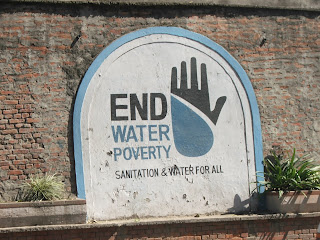
This sign is more significant than most people could imagine...only 7% of Kathmandu's water is treated, the rest is pumped into the river


The River


The Central Market


Market Masks


Overlooking into the Market


Dal Bat (the Nepali national food)-Comprised of rice and lentils and sides of spicy sauces and curry-had this more than we can count-we loved it after having it in the first week we were in Nepal and then by the second and third were sick of it for every meal of breakfast, lunch and dinner!!


Temples of Kathmandu


The World's Largest Sand Art Mural (in the only mall of Nepal)


Constant Traffic


Street view


Monkeys in the middle of the city, with just a tree and trash, they too suffer from poverty and the smog


Buddhists prayer flags


More Temples


Power issues abound as you can imagine...


And More Temples


Related Posts Plugin for WordPress, Blogger...